
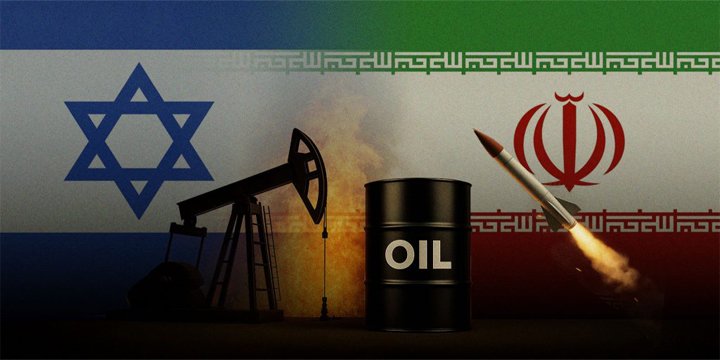
US ISRAEL ATTACK ON IRAN & ITS IMPACT ON GLOBAL OIL MARKETS
Why in News?
- On 28 February 2026, the United States (US) and Israel launched aerial and missile attacks on Iran.
- The strikes targeted Iranian cities and military installations, leading to the death of Iran’s Supreme Leader Ayatollah Ali Khamenei and several senior officials.
- In response, Iran launched missiles and drones against US allies in the Middle East.
- The conflict has raised serious concerns about regional security and global oil supply disruptions.
WHY DID THE US & ISRAEL ATTACK IRAN?
- The attack followed months of rising tensions over Iran’s nuclear programme.
- Key reasons cited by the US and Israel:
- Iran allegedly continues efforts to develop Nuclear Weapons
- Iran rejected diplomatic efforts to limit its nuclear activities
- Growing concerns about regional security threats
- The US administration stated the attack was meant to stop Iran from gaining nuclear weapons capability.
BACKGROUND OF IRAN NUCLEAR ISSUE
- The conflict is linked to the long-standing dispute over Iran’s nuclear programme.
- Important developments:
- Iranian Revolution (1979) established the Islamic Republic of Iran
- 2015 Iran Nuclear Deal (JCPOA) attempted to restrict Iran’s nuclear programme
- The US imposed sanctions on Iran’s oil sector
- Negotiations between the US and Iran had been ongoing but failed to reach an agreement
- Israel has long viewed Iran as an existential threat.
IRAN’S RESPONSE
Iran retaliated with missile and drone attacks across the Middle East.
Targets included:
- US military bases
- Oil and gas installations
- Civilian infrastructure
Countries affected include:
- Saudi Arabia
- Bahrain
- Qatar
- United Arab Emirates (UAE)
- Kuwait
- Jordan
- Iraq
- Cyprus
The conflict also triggered violence involving Hezbollah in Lebanon.
HUMANITARIAN IMPACT
- The conflict has caused significant civilian casualties.
- Reports indicate:
- More than 750 people killed in Iran
- Around 175 children killed in a school attack
- The United Nations (UN) and several international organisations have called for an immediate ceasefire.
WHY IRAN IS IMPORTANT FOR GLOBAL OIL SUPPLY?
- Iran is one of the largest producers of oil and gas in the world.
- Key facts:
- Iran is among the top five fossil fuel producers globally
- A large share of Iranian oil exports goes to China
- Iranian oil accounts for over 13% of China’s seaborne oil imports
- Despite US sanctions, Iran remains a major player in global energy markets.
STRATEGIC IMPORTANCE OF STRAIT OF HORMUZ
- Iran has threatened to block the Strait of Hormuz, a critical global shipping route.
- Important facts:
- The Strait of Hormuz is the main route for oil exports from the Persian Gulf
- Countries using this route include:
- Saudi Arabia
- Iraq
- Kuwait
- Qatar
- UAE
- Oman
- Together, these countries produce over 20% of the world’s fossil fuels.
- Any disruption here can severely affect global energy supply.
IMPACT ON GLOBAL OIL PRICES
- The conflict has already disrupted oil and gas infrastructure.
- Immediate effects:
- Oil prices increased by about 10%
- Natural gas prices increased by about 50%
- Before the conflict, oil was around $67 per barrel.
- If the conflict continues, prices may rise above $100 per barrel.
GLOBAL ECONOMIC IMPACT
- Rising energy prices can lead to:
- Higher fuel costs
- Inflation
- Food price increases
- Economic instability
- The situation may resemble the global energy crisis during the Russia–Ukraine war. Regions most affected could include:
- Europe
- United States
- Asia
BROADER GEOPOLITICAL IMPLICATIONS
- The conflict increases tensions across West Asia (Middle East).
- Possible consequences include:
- Expansion of regional conflict
- Greater military involvement of global powers
- Increased energy market instability
- At the same time, oil companies and defence industries may gain economically due to rising demand.
CONCLUSION
The US–Israel attack on Iran and Iran’s retaliation have created a serious geopolitical crisis in West Asia. Because the region produces a large share of the world’s oil and gas, the conflict threatens global energy security and economic stability. If tensions continue and the Strait of Hormuz is disrupted, the world could face sharp increases in oil prices and a new global energy crisis.
Note: Connect with Vajirao & Reddy Institute to keep yourself updated with latest UPSC Current Affairs in English.
Note: We upload Current Affairs Except Sunday.