
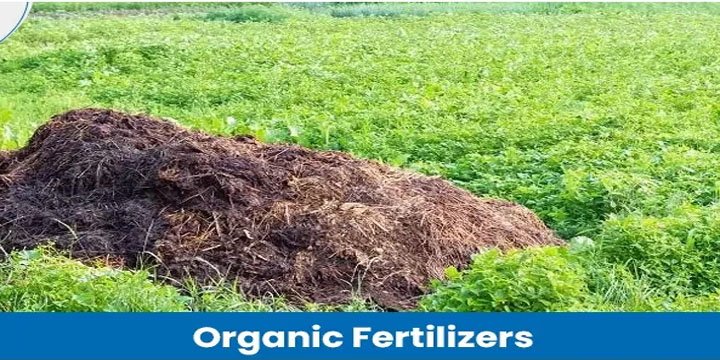
BLENDING OF ORGANIC MANURE WITH FERTILIZERS
Why in News
- The Indian Biogas Association (IBA) has recommended a mandatory 10% blending of fermented organic manure (FOM) with chemical fertilizers by 2030.
- The proposal aims to:
- Improve soil health
- Reduce dependency on chemical fertilizers
- Save nearly $2 billion annually in fertilizer imports
- The recommendation was presented through a white paper titled:
- “FOM feeds soil; soil feeds sustainability”
- The white paper was released by:
- Secretary, Ministry of New and Renewable Energy (MNRE)
ABOUT THE PROPOSAL
Core Recommendation
- The IBA has proposed:
- 10% mandatory blending of FOM with chemical fertilizers by 2030
- It also calls for integrating FOM into:
- Nutrient-Based Subsidy (NBS) framework
- Soil Health Card Scheme
- Paramparagat Krishi Vikas Yojana (PKVY)
OBJECTIVE
- To restore declining soil health in India
- To promote sustainable and regenerative agriculture
- To reduce dependence on chemical fertilizers
- To create a circular economy linking energy and agriculture
KEY FEATURES OF THE PROPOSAL
Blending Mandate
- A 10% blending requirement of FOM with chemical fertilizers is proposed by 2030.
- It is expected to:
- Improve soil fertility
- Enhance crop productivity
- Reduce fertilizer import dependence
Soil Health Improvement
- India’s soil organic carbon level is around 0.4%, which is critically low.
- Low soil organic carbon leads to:
- Poor soil fertility
- Reduced water retention
- Lower agricultural productivity
INTEGRATION WITH GOVERNMENT SCHEMES
- The proposal recommends inclusion of FOM in:
- Nutrient-Based Subsidy (NBS) system
- Soil Health Card Scheme
- PKVY (organic farming programme)
POLICY INNOVATION
- The inclusion of organic carbon as a nutrient parameter under subsidies is proposed.
- This would ensure:
- Balanced fertilization
- Fair subsidy distribution for organic inputs
- Reduced overuse of chemical fertilizers
CIRCULAR ECONOMY MODEL
- The proposal promotes a system linking:
- Biogas production
- Compressed Biogas (CBG)
- Fermented organic manure (FOM)
- It aims to ensure:
- 100% utilisation of biogas by-products
- Development of a sustainable agri-energy ecosystem
EXPECTED BENEFITS
Economic Benefits
- Potential savings of:
- $2 billion annually in fertilizer imports
- Reduced dependency on:
- Imported chemical fertilizers
Agricultural Benefits
- Improved:
- ○ Soil fertility
- Crop productivity
- Water retention capacity
Environmental Benefits
- Reduction in:
- Chemical fertilizer overuse
- Promotion of:
- Regenerative agriculture
- Sustainable farming practices
Systemic Benefits
- Strengthening of:
- Fertilizer distribution systems
- Public sector participation in organic inputs
- Creation of:
- Region-specific nutrient solutions
OVERALL SIGNIFICANCE
Soil Health
- Addresses India’s challenge of declining soil organic carbon
- Promotes long-term soil regeneration
Sustainability
- Supports transition towards:
- Climate-resilient agriculture
- Sustainable input usage
Policy Importance
- Encourages integration of:
- Energy sector (biogas)
- Agriculture sector
- Promotes policy convergence for green economy
Note: Connect with Vajirao & Reddy Institute to keep yourself updated with latest UPSC Current Affairs in English.
Note: We upload Current Affairs Except Sunday.