
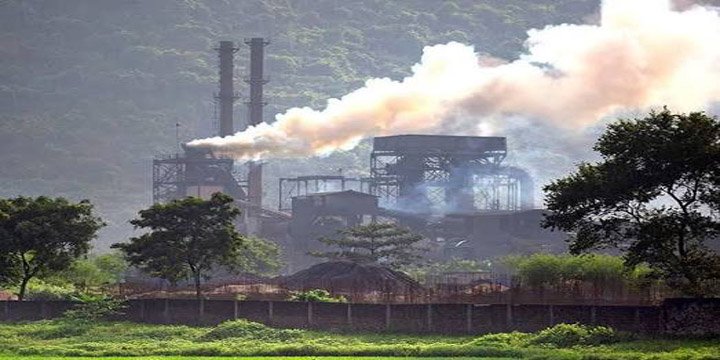
COAL POWER PLANTS & SO2 EMISSIONS: MAJOR CAUSE OF POOR AIR QUALITY IN DELHI
Why in News?
- A report by the Centre for Research on Energy and Clean Air (CREA) has revealed that 81% of sulphur dioxide (SO₂) emissions from coal-fired power plants within a 300 km radius of Delhi-NCR originate from plants that were exempted from mandatory installation of Flue Gas Desulphurisation (FGD) systems under the July 2025 notification.
- The findings come one year after the Union Government relaxed emission norms for most coal-based thermal power plants.
- Experts warn that increasing coal-based electricity generation, coupled with weaker emission controls, could worsen 5 pollution and public health outcomes.
KEY HIGHLIGHTS
Major Findings of the CREA Report
- 81% of SO₂ emissions around Delhi-NCR come from Category C coal plants exempted from FGD installation.
- Around 90% of estimated SO₂ emissions originate from plants operating without FGD systems.
- CREA assessed:
- 12 coal-fired thermal power plants
- 37 generating units
- 25 units with sufficient publicly available data.
- Estimated SO₂ emissions in 2025:
- 154 kilotonnes (kt)
- Category C plants alone contribute:
- 125 kilotonnes (81%)
- Category A plants contribute:
- 29 kilotonnes
WHY THE REPORT IS SIGNIFICANT?
- India is expected to witness higher coal-based electricity generation due to:
- Rising electricity demand.
- Reduced hydropower generation during strong El Niño
- Increased coal consumption without effective pollution controls may further deteriorate air quality in North India.
WHAT IS SO2?
Definition
- Sulphur dioxide (SO₂) is a colourless, toxic gas produced mainly by:
- Burning sulphur-containing fossil fuels (especially coal).
- Industrial processes.
- Smelting operations.
- Volcanic activity (natural source).
Major Sources in India
- Coal-fired thermal power plants.
- Petroleum refineries.
- Steel and cement industries.
- Industrial boilers.
- Heavy fuel oil combustion.
WHY IS SO2 A CONCERN?
Health Impacts
Exposure to SO₂ can cause:
- Respiratory diseases.
- Asthma attacks.
- Chronic bronchitis.
- Reduced lung function.
- Cardiovascular diseases.
- Stroke.
- Premature mortality.
Children, the elderly, and people with respiratory illnesses are particularly vulnerable.
Environmental Impacts
SO₂ contributes to:
- Formation of PM2.5 (secondary particulate matter).
- Acid rain.
- Soil acidification.
- Water pollution.
- Damage to crops and forests.
- Reduced visibility (haze).
HOW DOES SO2 FORM PM2.5?
Formation Process
- Coal combustion releases SO₂ into the atmosphere.
- SO₂ reacts with:
- Oxygen
- Water vapour.
- Ammonia.
- Forms:
- Sulphate aerosols.
- These become fine particulate matter (PM2.5).
Why PM2.5 is Dangerous
- Diameter less than 2.5 micrometres.
- Can penetrate deep into the lungs.
- Can enter the bloodstream.
- Causes long-term health problems and premature deaths.
WHAT IS FLUE GAS DESULPHURISATION?
FGD is an air pollution control technology used in coal-fired thermal power plants to remove sulphur dioxide (SO₂) from exhaust gases before they are released into the atmosphere.
Working Mechanism
- Flue gases pass through an absorber tower.
- Limestone or lime slurry reacts with SO₂.
- Converts SO₂ into:
- Gypsum (Calcium Sulphate).
- Cleaned gases are released through chimneys.
Efficiency
FGD systems can remove:
- 90–95% of sulphur dioxide emissions.
Benefits
- Reduces SO₂
- Lowers PM2.5 formation.
- Prevents acid rain.
- Improves air quality.
- Protects public health.
- Helps meet emission standards.
INDIA’S EMISSION NORMS FOR THERMAL POWER PLANTS
2015 Notification
The Ministry of Environment, Forest and Climate Change (MoEFCC):
- Mandated FGD installation for all coal-fired power plants.
- Original compliance deadline: 2017
Repeated Extensions
The deadline was extended four times due to:
- High installation costs.
- Equipment shortages.
- COVID-19 disruptions.
- Implementation delays.
2021 Categorisation of Thermal Power Plants
Plants were classified into:
Category A
- Plants located within:
- 10 km of Delhi-NCR
- Million-plus cities
- Critically polluted areas
Requirement
- Mandatory FGD installation.
Category B
- Plants near:
- Non-attainment cities.
Requirement
- Compliance based on pollution levels.
Category C
- Remaining thermal power plants.
Initially:
- Required to install FGDs.
July 2025 Notification: Relaxation of Norms
The Union Government revised emission norms.
Category A
- Must install FGDs by 2027.
Category B
- Assessed on a case-by-case basis.
Category C
- Exempted from mandatory FGD installation.
These plants account for nearly:
- 78% of India’s coal-fired thermal power plants.
WHY IS CREA CRITICAL OF THE REVISED POLICY?
1. Location-Based Categorisation is Inadequate
The categorisation depends mainly on:
- Whether a plant is located within 10 km of a city.
However, SO₂ can travel:
- Hundreds of kilometres before converting into PM2.5.
Thus, Even distant power plants can significantly affect Delhi-NCR’s air quality.
2. Increased Coal Generation
India’s electricity demand continues to rise.
During strong El Niño years:
- Hydropower generation declines.
- Coal generation increases.
Without FGDs, SO₂ emissions are expected to rise substantially.
3. Weak Monitoring
CREA highlights:
- Limited public access to Continuous Emission Monitoring System (CEMS)
- Lack of transparency regarding:
- FGD installation.
- Operational status.
- Compliance.
CASE STUDIES
Mahatma Gandhi Thermal Power Plant (FGD Installed)
Annual Generation
- Around 3,400–4,000 million units
SO₂ Emissions
- Unit 1:
- 1,775 tonnes
- Unit 2:
- 2,154 tonnes
Shows:
- Effective pollution control significantly reduces emissions.
Rajpura Thermal Power Plant (Without Effective FGD)
SO₂ Emissions
- Unit 1:
- 20,851 tonnes
- Unit 2:
- 22,690 tonnes
It emerged as:
- The largest SO₂ emitter in the study.
WHY DOES THIS MATTER FOR DELHI NCR?
According to CREA:
- The energy sector contributes up to:
- 16% of particulate pollution in Delhi-NCR cities.
Combined with:
- Vehicular emissions.
- Construction dust.
- Biomass burning.
- Crop residue burning.
SO₂ significantly worsens winter smog.
CHALLENGES
- Increasing dependence on coal.
- Relaxed emission standards.
- Slow FGD implementation.
- Weak regulatory enforcement.
- Poor monitoring transparency.
- Rising electricity demand.
- Climate-induced reduction in hydropower.
CREA’S RECOMMENDATIONS
1. Reinstate Mandatory FGD Installation
- Make FGDs compulsory for all coal-fired power plants, irrespective of category.
2. Improve Transparency
- Publicly disclose:
- Real-time CEMS data.
- SO₂
- Compliance reports.
3. Monitor FGD Performance
- Regularly publish:
- Installation status.
- Operational efficiency.
- Maintenance records.
4. Strengthen Regulatory Oversight
- Ensure strict enforcement of emission norms.
- Periodic environmental audits.
- Independent verification of emissions.
5. Accelerate Energy Transition
- Expand renewable energy.
- Improve energy efficiency.
- Promote battery storage.
- Reduce dependence on coal over the long term.
Note: Connect with Vajirao & Reddy Institute to keep yourself updated with latest UPSC Current Affairs in English.
Note: We upload Current Affairs Except Sunday.