
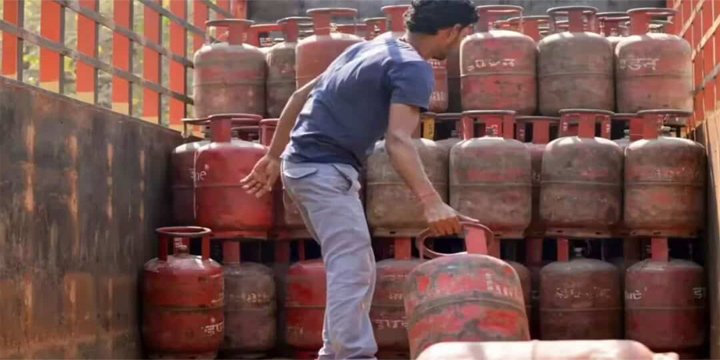
GOVT. PRIORITISES NATURAL GAS SUPPLY AMIDST LNG DISRUPTION
Why this news?
- India is facing a shortage of Liquefied Natural Gas (LNG) due to conflict in West Asia.
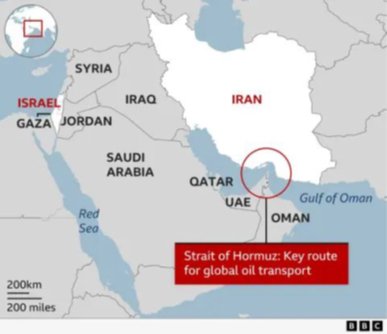
- Shipping through the strategic Strait of Hormuz has nearly stopped.
- To manage the crisis, the government invoked emergency powers under the Essential Commodities Act.
- Natural gas supply is now prioritised for households, transport (CNG), and LPG production, while supply to some industries has been reduced.
STRAIT OF HORMUZ DISRUPTION
- The Strait of Hormuz is a narrow waterway between Iran and Oman.
Why it is important
- Connects the Persian Gulf with the Arabian Sea.
- Handles about one-fifth of global oil and LNG trade.
For India
- Around 80% of LPG imports pass through this route.
- About 40% of India’s crude oil imports use this corridor.
- Over 50% of LNG imports also transit through it.
- Because of security threats and attacks on vessels, shipping traffic has been largely halted, disrupting energy supplies to India.
INDIA’S DEPENDENCY ON IMPORTED GAS
- India’s natural gas demand is about 190 million standard cubic metres per day (mscmd).
Key facts:
- Around 50% of demand is met through LNG imports.
- Major suppliers include:
- Qatar
- United Arab Emirates
For LPG:
- About 60% of India’s LPG demand is met through imports.
- More than 80% of LPG imports travel through the Strait of Hormuz.
Thus, geopolitical instability in West Asia directly affects India’s energy security.
WHAT IS LPG & WHY IS IT IMPORTANT?
- Liquefied Petroleum Gas is a fuel mainly made of propane and butane.
Uses
- Household cooking
- Heating
- Some industrial applications
Importance in India
- Used by more than 33 crore households.
- A major cooking fuel promoted under Pradhan Mantri Ujjwala Yojana.

BENEFITS OF LPG
- Burns cleaner than firewood or coal
- Reduces indoor air pollution
- Improves public health and household welfare
Therefore, uninterrupted LPG supply is critical for energy security and social welfare.
GOVERNMENT ACTION: EMERGENCY POWERS
- The government invoked Section 3 of the Essential Commodities Act, 1955.
- It also used provisions under the:
- Petroleum Products (Maintenance of Production, Storage and Supply) Order
- These laws allow the government to:
- Regulate production
- Control supply and distribution
- Prevent shortages during emergencies.
FOUR TIER PRIORITY
- Gas supply is now allocated based on four priority categories using the average gas consumption of the past six months.
Priority Category I – 100% Supply
- Includes sectors that directly affect citizens:
- Domestic PNG (Piped Natural Gas)
- CNG (Compressed Natural Gas) for vehicles
- Gas used for LPG production
- Gas required for pipeline operations
Priority Category II – 70% Supply Includes:
- Fertiliser plants
Conditions:
- Gas must be used only for fertiliser production.
- Compliance must be certified through the Petroleum Planning and Analysis Cell.
Priority Category III – 80% Supply Includes:
- Tea industry
- Manufacturing units
- Industrial consumers connected to the national gas grid.
Priority Category IV – 80% Supply
Includes:
- Commercial and industrial consumers supplied through City Gas Distribution (CGD)
CURTAILMENT TO NON PRIORITY SECTORS
- To ensure supply to essential sectors, gas supply has been reduced for:
- Petrochemical manufacturing units
- Gas-based power plants
- Consumers using domestic gas from difficult blocks
- Gas supply to refineries has been cut to 65% of recent average consumption.
- The public sector company GAIL is managing gas allocation and distribution.
MEASURES TO INCREASE LPG SUPPLY
The government has directed refineries to:
- Maximise LPG production.
- Use propane and butane streams exclusively for LPG production.
- Avoid diverting these inputs to petrochemical manufacturing.
- All LPG produced must be supplied to Oil Marketing Companies (OMCs) for distribution.
- These steps have increased domestic LPG production by around 10%.
ROLE OF OMCs
Three public sector companies manage LPG distribution in India:
- Indian Oil Corporation
- Bharat Petroleum Corporation Limited
- Hindustan Petroleum Corporation Limited
Functions
- Procurement of LPG
- Storage and transport
- Distribution through millions of distributors.
These companies ensure last-mile delivery of LPG cylinders across the country.
MEASURES TO PROTECT HOUSEHOLD LPG SUPPLY
- India has over 33 crore domestic LPG consumers.
- Steps taken:
- Domestic LPG users prioritised over commercial users.
- Minimum refill booking gap increased from 21 days to 25 days.
- Daily distribution remains around 60 lakh cylinders.
- Some commercial users like hotels and restaurants are facing supply disruptions.
- A committee of oil marketing company executives has been formed to review requests from commercial consumers.
DIVERSIFICATION OF LNG IMPORTS
India is exploring LNG imports from alternative suppliers such as:
- United States
- Norway
Challenges:
- Shipping time from these regions may take around two months.
- LNG prices have risen from $6–8 per MMBtu to about $15 per MMBtu.
However, imports from distant markets become viable when prices exceed $10 per MMBtu.
STRUCTURAL CHALLENGES IN LPG SUPPLY
High Import Dependence
- India consumed about 31 million tonnes of LPG in 2024–25.
- Domestic production is only about 13 million tonnes.
Major suppliers include:
- Saudi Arabia
- UAE
- Qatar
- Kuwait
Infrastructure Constraints
- LPG production depends on propane and butane output from refineries.
- Limited domestic gas production restricts expansion.
Global Market Risks
- Geopolitical conflicts disrupt shipping routes.
- Rising energy prices increase subsidy burden on the government.
WAY FORWARD FOR INDIA’S ENERGY SECURITY
To strengthen energy security, India may need to:
- Diversify LPG and LNG import sources to regions like the US, Africa, and Latin America.
- Expand Strategic Petroleum Reserves (SPR) and explore gas storage systems.
- Increase domestic gas exploration in deepwater and difficult basins.
- Promote alternative cooking fuels such as:
- Biogas
- Compressed Biogas (CBG)
- Electric cooking
- Green hydrogen (long term).
- Strengthen maritime security and international cooperation to protect major sea lanes.
Note: Connect with Vajirao & Reddy Institute to keep yourself updated with latest UPSC Current Affairs in English.
Note: We upload Current Affairs Except Sunday.