
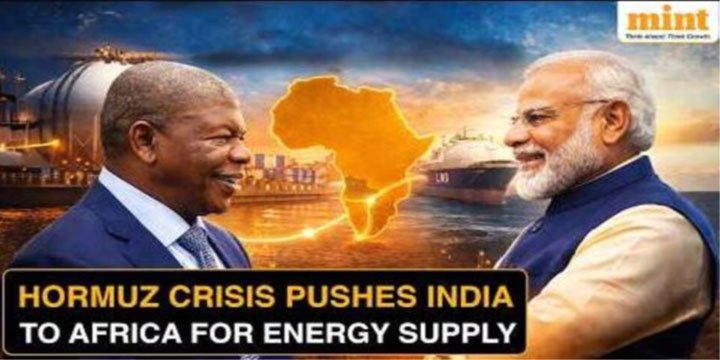
INDIA’S OUTREACH TO ANGOLA FOR ENERGY SECURITY
WHY IN NEWS?
- Disruption in the Strait of Hormuz exposed India’s energy vulnerability
- Impact on India:
- Nearly 90% of LPG supply routes affected
- Around 50% of LNG demand depends on imports
- India has started energy negotiations with Angola
- This is not just emergency action, but a long-term strategic shift in energy policy
CORE ISSUE IDENTIFIED
- India’s energy imports are highly concentrated in West Asia
- This creates:
- Geopolitical risk
- Supply disruption risk
Key Problem: Overdependence on a single region
WHY ANGOLA IS IMPORTANT?
- Angola has:
- 4.6 trillion cubic feet of gas reserves
- Already:
- India’s 5th largest LNG supplier (FY25)
- Export value: $924 million
Not a new partner, but an underutilised strategic partner
CURRENT DEVELOPMENTS
Indian Companies Involved
- Indian Oil Corporation (IOC)
- Bharat Petroleum Corporation Limited (BPCL)
- Hindustan Petroleum Corporation Limited (HPCL)
- GAIL Ltd
Partner
- Angola’s national oil company → Sonangol
Nature of Agreements
- Short-term contracts → LPG supply
- Long-term contracts (up to 10 years) → LNG imports
Shift from:
- Spot purchases → Structured long-term engagement
KEY DRIVERS BEHIND THIS SHIFT
(A) Supply Disruption
- Reduced supply from:
- Qatar
- UAE
Highlighted vulnerability of West Asia dependence
(B) Energy Security Need
- India requires:
- Stable and continuous supply
Crisis showed:
- Cost is less important than availability
(C) Strategic Diversification
- Aim:
- Reduce dependence on single geography
Move towards multi-region energy sourcing
ADVANTAGES OF ANGOLA
(A) Resource Strength
- Large natural gas reserves
(B) Existing Trade Link
- Already a reliable supplier
(C) Logistical Advantage
- Shipping time:
- 10–15 days shorter than North America
Leads to:
- Faster delivery
- Lower inventory cost
(D) Future Potential
- If imports increase:
- Trade may reach $2–3 billion annually
Angola can become a top-tier supplier
IMPACT ON INDIA AFRICA TRADE
- Current trade:
- $90–100 billion Expected Changes
(1) Energy Diversification
- Even 5–10% shift to Africa:
- Reduces dependence on West Asia
(2) Stable Long-Term Trade
- Long-term LNG contracts:
- Ensure predictable supply
(3) Expansion Beyond Energy
- Growth in:
- Shipping
- Ports
- Engineering services
(4) Investment Opportunities
- Indian firms may invest in:
- Angola’s energy sector
Shift from:
- Buyer–seller → Investment partnership
TRADE OFFS
(A) Higher Cost
- African gas may be:
- More expensive than Gulf suppliers
(B) Short-Term Burden
- Increased import cost
(C) Strategic Logic
Key Idea:
- Cost efficiency without supply security is risky
- India is shifting to:
- Risk-adjusted trade strategy
STRATEGIC SIGNIFICANCE
- Reduces dependence on:
- Hormuz chokepoint
- Creates:
- Diversified energy basket
- Improves:
- Long-term energy security
- Provides:
- Model for future diversification (Africa focus)
ABOUT ANGOLA
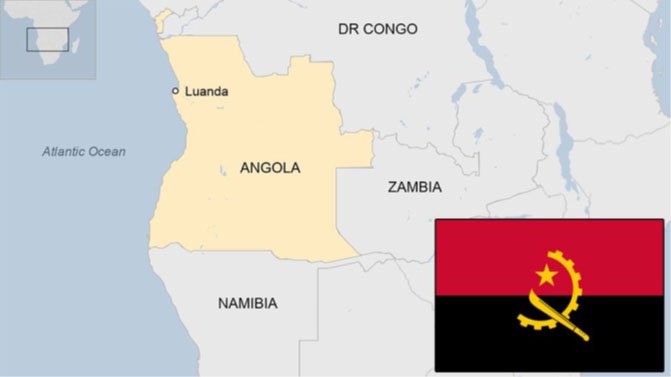
Location
- Angola is located on:
- South-Western coast of Africa
- Borders:
- Republic of Congo
- Democratic Republic of Congo
- Zambia
- Namibia
- Coastline:
- Atlantic Ocean Capital
- Luanda
GEOGRAPHICAL FEATURES
- Climate:
- Tropical with dry season
- Major Rivers:
- Cuango River
- Cuanza River
- Waterfall:
- Calandula Falls
- Highest Peak:
- Mount Moco
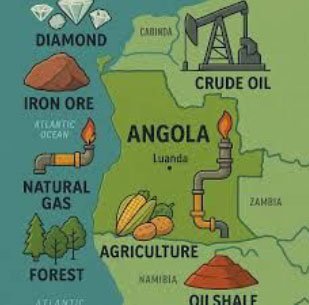
NATURAL RESOURCES FOUND
- Petroleum
- Diamonds
- Iron ore
- Gold
- Uranium
Note: Connect with Vajirao & Reddy Institute to keep yourself updated with latest UPSC Current Affairs in English.
Note: We upload Current Affairs Except Sunday.