
PM MODI’S SELF RELIANCE PUSH
Background
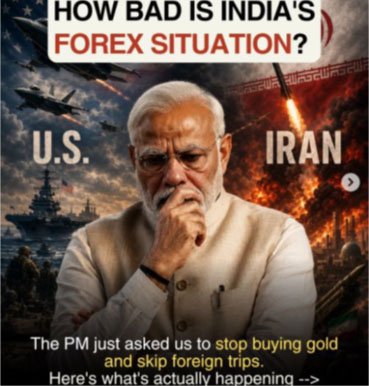
- Prime Minister Narendra Modi appealed to citizens to support the country during the global crisis caused by tensions in West Asia.
- The Prime Minister made this appeal while addressing a public meeting in Hyderabad on May 10, 2026.
- He emphasized the need to conserve Foreign Exchange Reserves (Forex Reserves) and reduce dependence on imports.
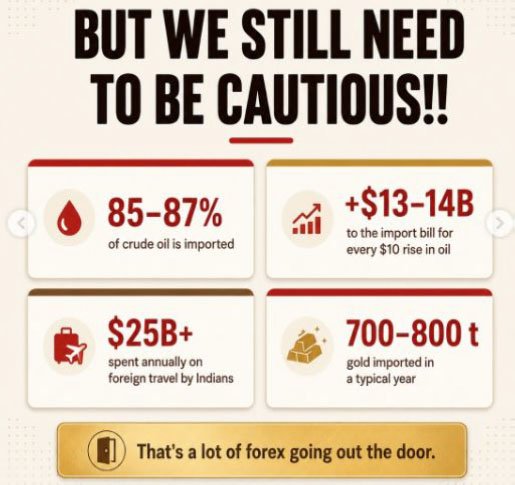
- The appeal came at a time when rising crude oil prices and high gold imports were increasing pressure on India’s economy.
- India’s gold imports reached nearly $72 billion in FY 2025–26, contributing to a widening trade deficit.
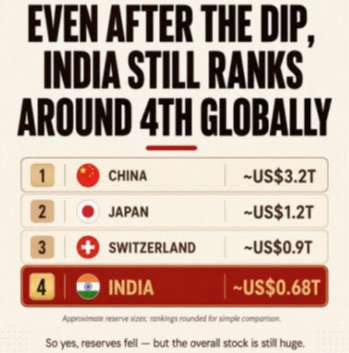
- India’s foreign exchange reserves were reported to be above $690 billion, but concerns remain regarding pressure from oil and gold imports.
- The Prime Minister linked the appeal with the vision of Atma Nirbhar Bharat or Self-Reliant India.
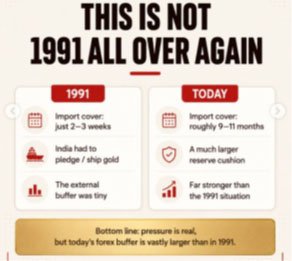
1991 V/S 2026
MAJOR APPEALS MADE BY THE PM
Reduction in Fuel Consumption
- The Prime Minister urged citizens to reduce the use of petrol and diesel in daily life.
- He advised people to use metro services wherever available.
- He encouraged the use of public transport and carpooling to reduce fuel consumption.
- He promoted the use of Electric Vehicles (EVs) to reduce dependence on imported crude oil.
- He suggested that goods should be transported more through railways rather than roadways.
- He stated that reducing fuel consumption would help India conserve foreign exchange reserves.
Revival of Work From Home and Virtual Meetings
- The Prime Minister asked citizens and organizations to revive Work From Home (WFH) arrangements and virtual meetings.
- He stated that India had successfully adapted to digital working methods during the Covid-19 pandemic.
- He encouraged the use of video conferencing and remote work to reduce travel expenses and fuel consumption.
- He described these practices as the “need of the hour” during the present global crisis.
Appeal to Avoid Non-Essential Foreign Travel
- The Prime Minister appealed to citizens to postpone unnecessary foreign travel for at least one year.
- He specifically mentioned foreign vacations, destination weddings, and luxury overseas travel.
- He stated that increasing foreign travel among the middle class was causing a large outflow of foreign exchange.
- He urged citizens to prioritize national interest over non-essential spending abroad.
Appeal to Reduce Gold Purchases
- The Prime Minister urged people to avoid purchasing gold during festivals and weddings for at least one year.
- He stated that reducing gold imports would help conserve foreign exchange reserves.
- India is one of the world’s largest importers of gold, and heavy imports increase pressure on the trade deficit.
- The Prime Minister presented the appeal as a voluntary and patriotic contribution toward economic stability.
- The article noted that jewellery stocks declined after the Prime Minister’s appeal, as investors anticipated moderation in gold demand.
Promotion of “Vocal for Local”
- The Prime Minister encouraged citizens to identify imported goods used in daily life and gradually shift toward Indian-made products.
- He clarified that people should not immediately discard foreign products.
- He stated that the long-term goal should be to strengthen domestic manufacturing and self-reliance.
- He connected this appeal with the “Vocal for Local” campaign that had earlier been promoted during the Covid-19 pandemic.
Reduction in Cooking Oil Consumption
- The Prime Minister appealed to families to reduce cooking oil consumption by 10%.
- He stated that lower edible oil consumption would improve family health.
- He also noted that India imports large quantities of edible oil, and reducing consumption would lower import dependence.
Promotion of Natural Farming
- The Prime Minister appealed to farmers to reduce dependence on chemical fertilizers.
- He promoted natural farming practices to improve agricultural self-reliance.
- He stated that natural farming would reduce import dependence and support sustainable agriculture.
HISTORICAL CONTEXT OF GOLD CONTROL POLICIES
United States Gold Policy, 1933 :
- During the Great Depression, US President Franklin D. Roosevelt issued Executive Order 6102 in 1933.
- The order restricted private ownership of gold in the United States.
- Americans largely complied due to patriotism and fear of legal penalties.
- The policy helped strengthen US gold reserves and the financial position of the United States.
INDIA’S GOLD CONTROL ACT,1968
- In 1968, Finance Minister Morarji Desai introduced the Gold Control Act.
- The law was introduced after economic difficulties caused by the 1962 India-China War and the 1965 India-Pakistan War.
- The Act banned private ownership of gold bars and coins.
- Citizens were required to convert gold into jewellery and declare their holdings.
- The government expected citizens to cooperate in the national interest.
- However, demand for gold remained very high despite the restrictions.
- The policy led to increased gold smuggling, expansion of hawala networks, and growth of the black economy.
- Illegal trade and tax evasion increased significantly during this period.
- The Gold Control Act was eventually repealed in 1990.
DIFFERENCE BETWEEN 1968 POLICY & 2026 APPEAL
- The Gold Control Act of 1968 imposed compulsory legal restrictions, whereas the 2026 appeal is voluntary.
- The current government has not imposed any legal ban on gold ownership or purchases.
- Modern India has financial alternatives such as Gold ETFs, Sovereign Gold Bonds (SGBs), and digital gold investments.
- The present approach focuses on patriotism, awareness, and self-discipline rather than coercion.
MODERN ALTERNATIVES TO PHYSICAL GOLD
Sovereign Gold Bonds (SGBs) [Discontinued since 2025]
- Sovereign Gold Bonds (SGBs) are government securities denominated in grams of gold.
- The SGB Scheme was launched by the Government of India on 30 October 2015.
- SGBs were issued by the Reserve Bank of India (RBI) on behalf of the Governmentof India (GOI).
- SGBs acted as a substitute for holding physical gold, allowing investors to invest in gold without storing it physically.
CURRENT STATUS OF SGBs
- As of May 2026, the Sovereign Gold Bond (SGB) scheme is no longer open for new subscriptions.
- The Government of India has discontinued issuing new tranches of SGBs.
- However, existing SGBs remain valid until maturity.
- Existing bonds continue to trade on stock exchanges (NSE/BSE).
- Investors cannot purchase new SGBs directly from the RBI
- Investors can still buy SGB units from existing holders in the secondary market (NSE/BSE).
Gold ETFs
- Gold Exchange Traded Funds (ETFs) allow investors to invest in gold digitally.
- Gold ETFs reduce storage risks associated with physical gold.
Digital Gold
- Digital gold allows people to purchase and store gold online in small quantities.
- Digital platforms provide easy access to gold investment without physical handling.
WHY GOLD DEMAND REMAINS STRONG IN INDIA?
- Gold is considered a symbol of wealth, security, and prosperity in Indian society.
- Gold plays an important role in weddings, festivals, and religious traditions.
- Many households consider physical gold a safe investment during inflation and economic uncertainty.
- Rural and semi-urban families often trust physical assets more than financial instruments.
ECONOMIC IMPORTANCE OF THE APPEAL
- Reduced gold and fuel imports can help lower India’s trade deficit.
- Lower imports can reduce pressure on foreign exchange reserves.
- Reduced import dependence can help stabilize the Indian Rupee.
- More domestic savings may flow into productive investments such as manufacturing and infrastructure.
- Increased investment can support economic growth and job creation.
CHALLENGES ASSOCIATED WITH THE SCHEME
Cultural Attachment to Gold
- Gold buying is deeply linked with Indian cultural traditions and social customs.
- Weddings and festivals are major periods of gold consumption in India.
- Therefore, changing public behavior regarding gold purchases may be difficult.
Risk of Smuggling
- Historical experience shows that excessive restrictions on gold can increase smuggling activities.
- Illegal trade and black market networks may expand if harsh controls are introduced.
- Therefore, voluntary cooperation is considered more effective than strict legal enforcement.
Note: Connect with Vajirao & Reddy Institute to keep yourself updated with latest UPSC Current Affairs in English.
Note: We upload Current Affairs Except Sunday.