
RASHTRIYA BAL SWASTHYA KARYAKRAM 2.0 GUIDELINES
Why in News?
- The Ministry of Health and Family Welfare released the Rashtriya Bal Swasthya Karyakram (RBSK) 2.0 Guidelines.
- The guidelines were released during the National Summit on Good Practices and Innovations in Public Healthcare Service Delivery.
- The revised framework aims to strengthen child healthcare services across India.
WHAT IS RBSK?
- Rashtriya Bal Swasthya Karyakram (RBSK) is a flagship child health screening programme of the Government of India.
- It focuses on:
- Early identification
- Early diagnosis
- Early treatment of health conditions in children
- The programme covers children from:
- Birth to 18 years of age
MAIN OBJECTIVES OF RBSK 2.0
- To strengthen and expand child health services in India.
- To address both traditional and emerging child health challenges.
- To ensure:
- Early detection of diseases
- Timely treatment
- Holistic growth and development of children
THE 4Ds APPROACH UNDER RBSK
The programme continues its focus on the established 4Ds approach:
- Defects at Birth : Identification of congenital abnormalities present at birth.
- Diseases : Detection of childhood diseases requiring medical attention.
- Deficiencies : Identification of nutritional deficiencies and related health problems.
- Developmental Delays : Detection of physical, cognitive and developmental delays in children.
NEW AREAS ADDED UNDER RBSK 2.0
The revised guidelines broaden the programme scope by including:
- Non-communicable diseases (NCDs)
- Mental health conditions
- Behavioural concerns
- Developmental disorders
- Risk factors for:
- Diabetes
- Hypertension
LIFECYCLE BASED APPROACH
- RBSK 2.0 strengthens the lifecycle-based approach.
- The programme now provides a continuous healthcare framework for children from:
- Birth to 18 years
Focus Areas
- Preventive care
- Promotive care
- Curative care
The aim is not only survival of children, but also their:
- Healthy growth
- Mental well-being
- Overall development
EXPANDED SCREENING SERVICES
- Screening services will continue through:
- Mobile Health Teams
- Anganwadi Centres
- Schools
Purpose
- Universal outreach
- Early identification of health problems
- Timely intervention
STRENGTHENED REFERRAL SYSTEM
The guidelines focus on improving referral linkages and continuity of care.
Key Features
- Clear referral pathways from:
- Community-level screening
- To hospital-based diagnosis and treatment
- A referral tracking system will ensure:
- Follow-up of identified children
- Reduced treatment dropouts
- Timely healthcare intervention
DIGITALISATION UNDER RBSK 2.0
A major focus of the revised guidelines is digital health systems.
Digital Features Introduced
- Digital health cards
- Real-time data systems
- Integrated digital platforms for:
- Tracking
- Monitoring
- Service delivery
Expected Benefits
- Better programme efficiency
- Improved accountability
- Evidence-based decision making
- Improved monitoring at all levels
MULTISECTORAL CONVERGENCE
The guidelines promote coordination among different sectors, including:
- Health sector
- Education sector
- Women and Child Development system
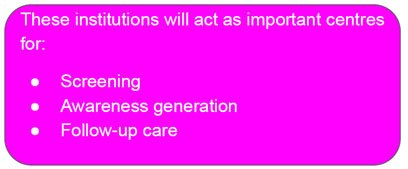
Role of Institutions
- Schools
- Anganwadi Centres
- Community platforms
IMPORTANCE OF RBSK 2.0
- Helps identify diseases and developmental issues at an early stage.
- Timely intervention can reduce long-term health complications.
- Early treatment helps reduce serious illnesses in future.
- Covers physical, mental and behavioural health of children.
- Community-level outreach ensures wider healthcare access.
- Supports India’s push towards technology-driven healthcare systems.
CONCLUSION
- RBSK 2.0 marks a major upgrade in India’s child healthcare programme.
- The revised guidelines aim to provide:
- Comprehensive screening
- Better referral systems
- Continuous follow-up care
- Digital health support
- The initiative reflects the government’s commitment towards accessible, equitable andquality healthcare for every child in the country.
Note: Connect with Vajirao & Reddy Institute to keep yourself updated with latest UPSC Current Affairs in English.
Note: We upload Current Affairs Except Sunday.