
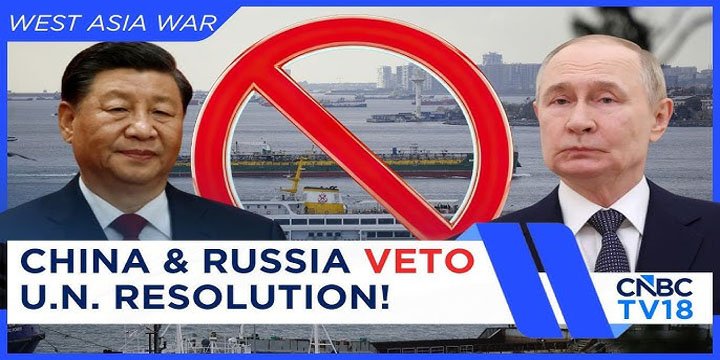
RUSSIA & CHINA VETO ON UN RESOLUTION
Why in News?
- On 7 April 2026, Russia and China vetoed a resolution in the United Nations Security Council related to the reopening of the Strait of Hormuz.
- The resolution was introduced amid:
- Ongoing US–Iran conflict
- Rising global energy crisis
THE RESULT
- The voting result was:
- 11 votes in favour
- 2 vetoes (Russia, China)
- 2 abstentions (Pakistan, Colombia)
- The vote took place just before a deadline set by Donald Trump demanding Iran reopen the Strait.
This event highlights global power divisions and limits of UN action
IMPORTANCE OF STRAIT OF HORMUZ
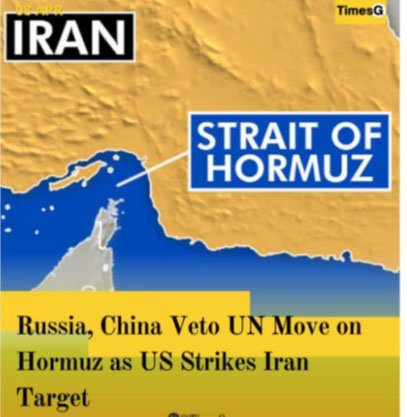
- The Strait of Hormuz is a strategic maritime chokepoint
Key Facts:
- Around 20% of global oil supply passes through it
- It connects:
- Persian Gulf → Arabian Sea
During Conflict:
- Iran restricted movement in the Strait
- This led to:
- Sharp rise in global oil prices
- Threat to global energy security
Gulf countries considered this an existential threat
ABOUT THE PROPOSED UN RESOLUTION
Initial Proposal
- Proposed by Bahrain
- __________It aimed to:
- Ensure free navigation
- Reopen the Strait
- Initially allowed:
- Use of “all necessary means” (including military force)
Dilution of Resolution :
- Due to opposition from Russia, China, France:
Changes made:
- Removed:
- Use of offensive force
- Limited to:
- Defensive measures only
- Further diluted to:
- Only encourage coordination among countries
- No direct authorization of action
The resolution became very weak
FINAL PROVISION OF THE RESOLUTION
- It encouraged countries to:
- Protect commercial shipping
- Escort merchant vessels
- Ensure safe navigation
- It demanded Iran to:
- Stop attacks on ships and infrastructure
- Respect freedom of navigation
However, it had no binding enforcement mechanism
WHY DID RUSSIA & CHINA VETO?
- Russia and China argued that:
- The US and Israel started the conflict
- Military pressure would increase tensions
- They emphasized:
- Need for immediate ceasefire
- Preference for diplomatic solution
Their veto reflects geopolitical alignment and strategic interests
IMPACT OF THE VETO
On Global Governance
- Shows limitations of:
- United Nations system
- Even with majority support:
- A single veto can block action
On Conflict
- No strong international action to:
- Reopen Strait
- Protect shipping
- Conflict continued without:
- Effective global intervention
On Global Economy
- Continued:
- Energy supply disruption
- High oil prices
Increased economic uncertainty worldwide
REACTION OF COUNTRIES
- Gulf countries (like Bahrain) expressed concern:
- Said failure sends wrong signal globally
- The resolution was seen as:
- A missed opportunity to ensure maritime security
ABOUT UNSC
Basic Features
- The United Nations Security Council is:
- One of the 6 principal organs of the UN
- Established in:
- 1945
- Main role:
- Maintain international peace and security
Structure : Total Members: 15
Permanent Members (P5)
- Countries:
- China, France, Russia, UK, USA
- Special power:
- Veto Power
Any one veto can block a resolution
Non-Permanent Members (10)
- Elected for:
- 2-year terms
- Based on:
- Geographical representation
Voting System
- A resolution requires:
- At least 9 votes in favour
- No veto by P5 members
KEY POWERS
- Sanctions (economic restrictions)
- Peacekeeping missions
- Authorization of military action
- Conflict investigation
Legal Authority
- Under Article 25 of UN Charter:
- Members must follow UNSC decisions
Makes UNSC decisions legally binding
SIGNIFICANCE OF UNSC IN THIS CASE
- UNSC acted as:
- A global negotiation platform
- However:
- Veto power prevented action Highlights:
- Power politics over global consensus
CONCLUSION
- The veto by Russia and China reflects:
- Geopolitical rivalry
- Limits of multilateral institutions
- Despite global concern:
- UNSC could not take effective action
- The event shows that:
- International peace mechanisms depend heavily on major powers’ interests
Note: Connect with Vajirao & Reddy Institute to keep yourself updated with latest UPSC Current Affairs in English.
Note: We upload Current Affairs Except Sunday.