
TEMPLE TOURISM & ENVIRONMENTAL STRESS IN WESTERN GHATS
Why in News
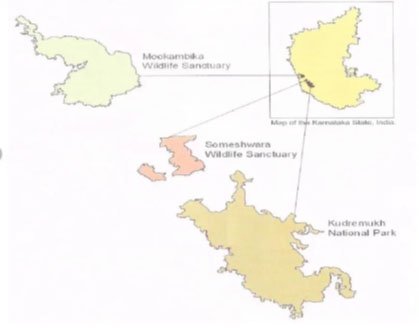
- Sewage from temple-based tourism activities in Kollur (Udupi district, Karnataka) is polluting the Souparnika River, which flows through Mookambika Wildlife Sanctuary.
- The issue has intensified due to rapid tourism growth, unregulated commercialisation, and failure of sewage treatment systems.
- The pollution is now threatening the core biodiversity zone of the Western Ghats ecosystem.
ABOUT THE ISSUE
- The Souparnika River is carrying untreated sewage and sludge from Kollur town into the sanctuary.
- Rapid expansion of hotels, homestays, and tourism services has increased waste discharge.
- Local authorities have permitted around 50 commercial establishments, with additional unregulated units operating.
ENVIRONMENTAL IMPACT
- Pollution is affecting the river ecosystem and forest habitat.
- Threats include:
- Contamination of drinking and bathing water sources
- Spread of water-borne diseases
- Degradation of aquatic and riparian ecosystems
- Stress on wildlife dependent on river systems
BIODIVERSITY SIGNIFICANCE OF MOOKAMBIKA SANCTUARY
- Located in the Western Ghats, a global biodiversity hotspot.
- Notified in 1978, covering around 247 sq km (part of larger ecological landscape).
- Important species include:
- Tiger, leopard, wild dog, sloth bear
- Lion-tailed macaque (endangered)
- Malabar civet, giant squirrel, king cobra
- Part of ecological corridor with:
- Someshwara Wildlife Sanctuary
- Kudremukh National Park
RIVER SYSTEM & ECOLOGY
- Important rivers:
- Souparnika River (currently polluted)
- Chakra River
- Supports dense evergreen and semi-evergreen forests
- Critical habitat connectivity for Western Ghats fauna movement
LEGAL & INSTITUTIONAL ISSUES
Wildlife Protection Act Violation
- Under Section 29 of Wildlife Protection Act, 1972:
- Destruction or alteration of wildlife habitat is a punishable offence
- Punishment: up to 3 years imprisonment + fine
- Strict provisions for Schedule I species protection
Institutional Response
- Karnataka State Pollution Control Board (KSPCB) has issued notices and restraining orders
- Sewage Treatment Plant (STP) of 5 MLD capacity has become non-functional
- Case reportedly under consideration of the National Green Tribunal (NGT)
- Forest Department has repeatedly flagged the issue to pollution authorities
CAUSE OF THE PROBLEM
- Unplanned tourism expansion
- Failure of wastewater management systems
- Weak enforcement of environmental regulations
- Lack of coordination between tourism, urban, and forest departments
BROADER ENVIRONMENTAL CONTEXT
- Western Ghats is a UNESCO-recognised biodiversity hotspot region
- Acts as a critical ecological corridor in peninsular India
- Increasing pressure from:
- Religious tourism
- Infrastructure expansion
- Urbanisation in eco-sensitive zones
SIGNIFICANCE
- Highlights conflict between religious tourism and ecological sustainability
- Shows failure of wastewater governance in eco-sensitive zones
- Threatens endangered and endemic species of Western Ghats
- Undermines India’s commitments to biodiversity conservation
CHALLENGES
- Weak enforcement of environmental clearance norms
- Poor maintenance of sewage treatment infrastructure
- High dependence on tourism economy in local areas
- Fragmented governance between forest, urban, and pollution control bodies
WAY FORWARD
- Strict enforcement of Eco-Sensitive Zone (ESZ) regulations
- Upgrade and ensure functioning of STPs with real-time monitoring
- Introduce carrying capacity-based tourism limits
- Promote eco-tourism instead of mass religious tourism
- Strengthen inter-departmental coordination (Forest–Urban–Tourism)
- Use NGT and CPCB monitoring for compliance enforcement
Note: Connect with Vajirao & Reddy Institute to keep yourself updated with latest UPSC Current Affairs in English.
Note: We upload Current Affairs Except Sunday.