

WULAR LAKE RESTORATION
Why in News
- Restoration of Wular Lake is showing positive results
- Key work done:
- Removal of 1.31 lakh willow trees
- Dredging of 78.43 lakh cubic metres silt
- 5 sq km area reclaimed
- Aim:
- Restore wetland ecology
- Improve water storage and flood control
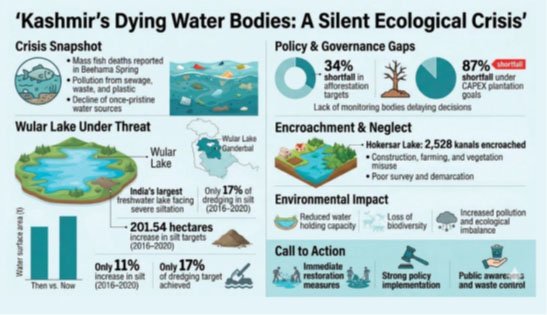
ABOUT WULAR LAKE
- Largest freshwater lake in India
- Second largest in Asia
- Location:
- Bandipore district, Jammu & Kashmir
- ~32 km from Srinagar
- Altitude:
- ~1580 m
- Foothills of Haramuk Mountain
- Formed due to:
- Tectonic activity
- Controls flow of:
- Jhelum River
- Area varies:
- 30 to 260 sq km (seasonal)
- Ramsar Site since:
- 1990
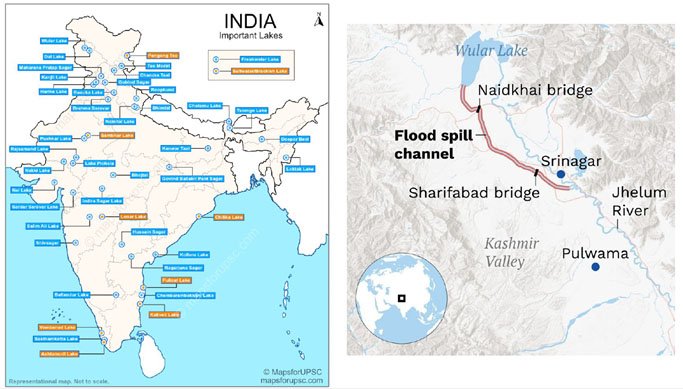
IMPORTANCE OF THE LAKE
- Acts as:
- Flood buffer
- Water storage system
- Supports:
- Fish, birds, wetland biodiversity
- Provides:
- ~60% fish yield of Kashmir Valley
RESTORATION MEASURES
- Willow removal:
- Reduced encroachment and siltation
- Dredging:
- Increased depth and water capacity
- Bund strengthening (15 km):
- Prevents floods and encroachment
- Afforestation:
- 19 lakh trees planted
- Reduces soil erosion
DEVELOPMENT WORKS
- 2.5 km walkway with:
- Cycling tracks
- Viewing points
- Parks developed for:
- Eco-tourism
- Revenue generated:
- ₹31.95 crore
SIGNIFICANCE
- Ecological:
- Restores wetland health
- Hydrological:
- Improves flood control
- Economic:
- Boosts fisheries and tourism
- Climate:
- Wetlands act as carbon sinks
Note: Connect with Vajirao & Reddy Institute to keep yourself updated with latest UPSC Current Affairs in English.
Note: We upload Current Affairs Except Sunday.