
IPCC ASSESSMENT REPORTS (AR)
WHY IN NEWS?
- IPCC’s assessment reports and various special reports laid emphasis on the fact that the planet is warming and humans bear primary responsibility.
- Till now, three reports from the IPCC’s sixth assessment cycle (AR6) were published in 2021-2022.
ABOUT IPCC:
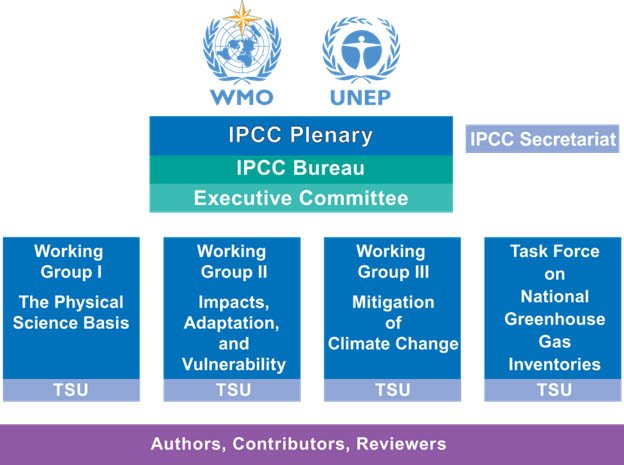
- It was created in 1988 by the World Meteorological Organization (WMO) and the United Nations Environment Programme (UNEP).
- The primary objective of the IPCC is to provide governments at all levels with scientific information that they can use to develop climate policies.
- Its reports are also a key input into international climate change negotiations.
- It is an organization of governments that are members of the United Nations or WMO. Currently, it has 195 members.
- For the preparation of assessment reports, experts volunteer their time as IPCC authors to assess the thousands of scientific papers published each year to provide a comprehensive summary of what is known about the drivers of climate change, its impacts and future risks, and how adaptation and mitigation can reduce those risks.
- The IPCC identifies the strength of scientific agreement in different areas through its assessments and indicates where further research is needed.
- IPCC does not conduct its own research. Thousands of people from all over the world contribute to the work of the IPCC.
FINDINGS OF THE RECENT REPORT:
- The Sixth Assessment Report warned that the time to limit the rise of the world’s average surface temperature to 1.5 degrees Celsius from the pre-industrial era is running out and we are close to breaching adaptation limits.
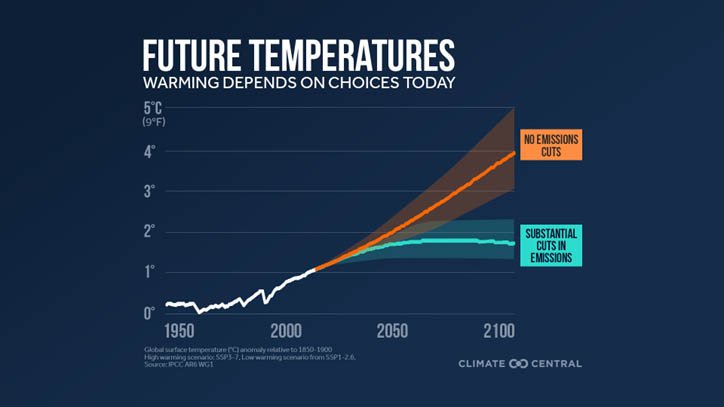
- Reports suggested some options and strategies to slow warming, and to adapt and build resilience in natural systems, in human-made systems.
- Soon after the AR6 synthesis report, the body initiated its seventh cycle (AR7) by electing an IPCC bureau.
- Earlier, the co-chairs and rapporteurs of the Informal Group on Lessons Learned had produced a paper based on the learnings from the AR6 cycle and submissions from 66 of the 195 member countries regarding the types of reports, the need for special reports, and the value of ‘full assessment reports’.
- The paper proposed on a recommendation by each of the member countries to “ensure adequate input from the IPCC is available for the second global stocktake to be concluded in 2028”.
WHAT IS GLOBAL STOCKTAKE?
- UNFCCC countries conduct a ‘global stocktake’ (GST) every five years to assess the world’s progress towards the goals of the Paris Agreement.
- It is a mechanism to measure collective progress, identify gaps, and chart a better course of climate action.
- It was started in year 2022 and ended at the 28th session of the Conference of the Parties (COP28) to the UNFCCC in 2023.
- The first GST text, to which member countries agreed to at the COP28 in Dubai last year, requested the IPCC to consider ways in which its work can be aligned with subsequent stocktakes.
- The second GST is due in 2028.
- Member countries of IPCC have requested to publish its AR7 assessment reports before so that countries could measure their progress against the state of the planet.
FUTURE REPORTS OF IPCC:
- The full assessment reports will include reports from three Working Groups and a synthesis report.
- This decision considered the time available for signifcant new literature to be published, time required to run climate models, time to engage with under-represented communities, and the stress imposed on the IPCC technical support unit and the authors.
- The two methodology reports will be based on short-lived climate forcers (like methane) and on carbon removal.
- The bureau decided to revise the technical guidelines on impacts and adaptations.
- While countries suggested producing special reports spanning 28 topics, but the bureau decided to produce only one report on climate change and cities.