
LANCET STUDY ON OBESITY AND NUTRITION
WHY IN NEWS?
- Recently, Lancet published a study which says India has become one of the countries with a high “double burden”.
MORE ABOUT THE LANCET STUDY:
- As per the study, India has seen a constant increase in obesity levels both in adults and children over the last 32 years.
- The prevalence of undernutrition has also remained high in the country.
- The rise in obesity and undernutrition is due to lack of access to affordable and nutritious food for the prominence of undernutrition and obesity.
- According to study, “Though lack of access to food can lead to undernutrition, increased access to processed foods high in fats, salt, and sugar has driven up obesity”.
- As in 2022, about 12.5 million children aged between five and 19 in India were overweight.
- In India, the adult obesity rate increased from 1.2 per cent in 1990 to 9.8 per cent in 2022 for women and 0.5 per cent to 5.4 per cent for men.
- The total number of children and adolescents who were affected by obesity in 2022 was nearly 160 million (65 million girls and 94 million boys), compared to 31 million in 1990.
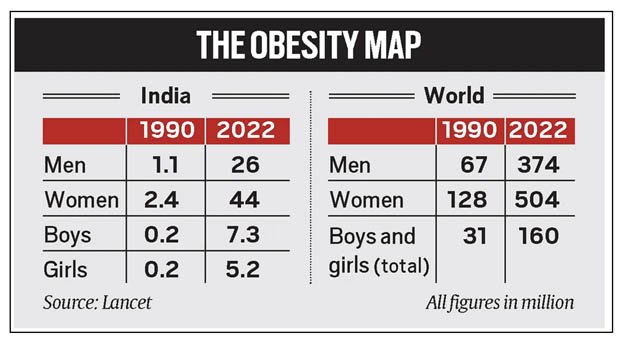
- On the other hand, 77 million girls and 108 million boys were underweight in 2022, decreasing from 81 million for girls and 138 million for boys in 1990.
HOW IS OBESITY AND UNDERNUTRITION CALCULATED ?
- According to the WHO, obesity is an abnormal or excessive accumulation of fat which poses health risks.
- Adults(over 20) are considered to be obese, if they have a body mass index (BMI) of 30 kg/m2 or more.
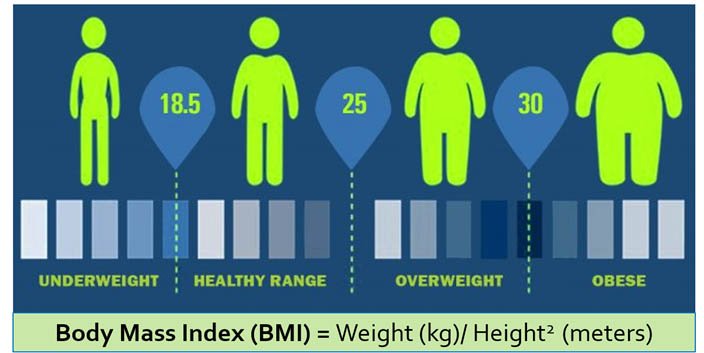
- Underweight is one of the four broad sub-forms of undernutrition.
- An adult is considered underweight if their BMI is less than 18 kg/m2.
- In School-aged children and adolescents, they are considered underweight if their BMI is two standard deviations below the mean.
IMPACTS OF OBESITY AND UNDERWEIGHT:
- An increase in obesity, especially in children, is likely to lead to an increase in diseases such as diabetes, hypertension, heart attacks, and strokes.
- In 2019, there were estimated 5 million deaths from non-communicable diseases (NCDs) such as cardiovascular diseases, diabetes, cancers, neurological disorders, chronic respiratory diseases, and digestive disorders due to obesity.
- On the other hand, being underweight is linked to nutritional deficiencies, delayed wound healing, hormonal abnormalities, increased susceptibility to infection, and increased risk of some chronic diseases such as osteoporosis.
- Social and emotional impacts of being an overweight or obese are no less real than economic costs.
- Individuals with obesity and underweight often face discrimination, lower wages, depression, anxiety, and lower quality of life.
REASONS OF RISING OBESITY AND UNDERWEIGHT:
- Women are more prone to obese because most of them do not have access to or time for physical activities such as walks or gyms.
- Nowadays eating junk food is cheaper and easier, which has led to an increase in obesity even among the poor.
- Undernutrition is prevalent in the extremely poor populations in states like Bihar, Jharkhand, or Odisha, due to lack of availability of food, where people might be eating just one meal a day.
- An analysis of the NFHS-5 data from last year shows that the prevalence of obesity was 31.7% in urban women and 19% in rural women. It was 28.6% among urban men and 18.8% among rural men.
STEPS NEEDS TO BE TAKEN:
- The government focus has to be on programmes that enhance healthy nutrition, such as targeted cash transfers, food assistance as subsidies or vouchers for healthy foods, free healthy school meals, and primary care-based nutritional interventions.
- As the age of onset of obesity has decreased, prevention and management are especially important. Making healthy food affordable and accessible is the challenge.
- Limiting the consumption of sugar sweetened beverages and energy-dense foods and promote other healthy eating behaviours.
WAY FORWARD: “WHO TARGETS” –
- The World Health Assembly Global Nutrition Targets aiming to ensure no increase in childhood overweight, and the NCD target to halt the rise of diabetes and obesity by 2025.
- The assembly recognized that accelerated global action is needed to address pervasive and corrosive problem of the double burden of malnutrition.
- At the 75th World Health Assembly in 2022, Member States demanded and adopted new recommendations for the prevention and management of obesity and endorsed the WHO Acceleration plan to stop obesity.