
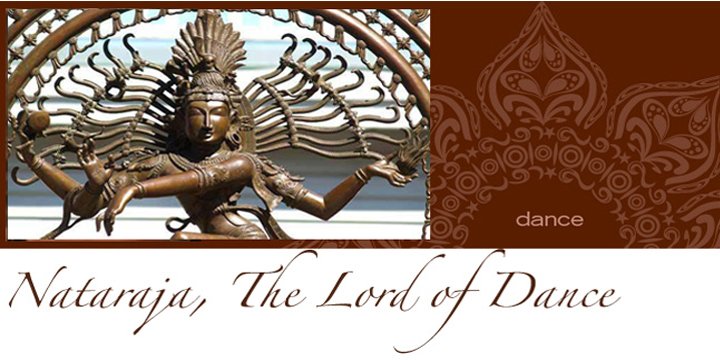
LORD OF DANCE: NATARAJA
WHY IN NEWS ?
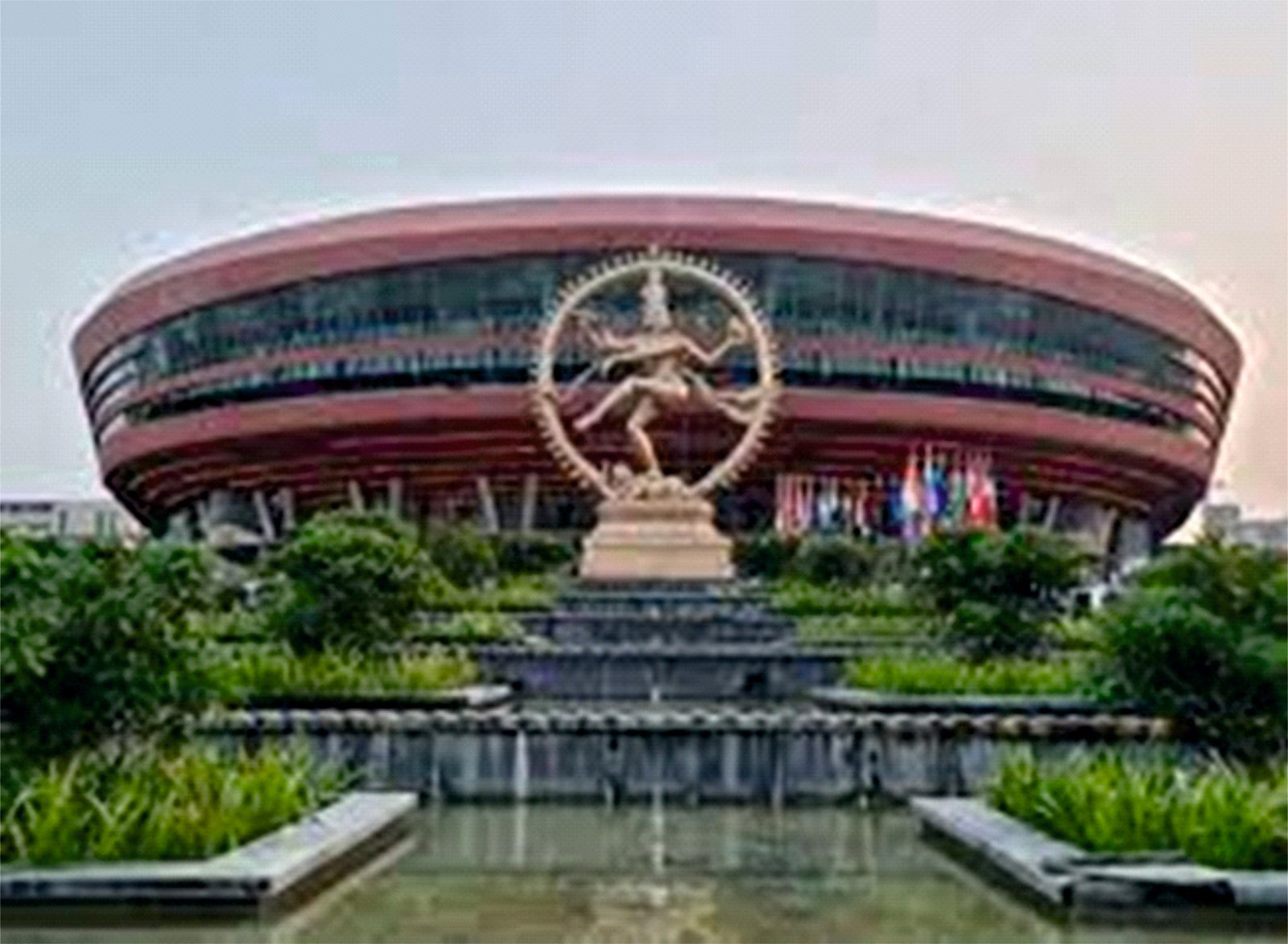
- Recently, 27-feet-tall ‘Nataraja’ statue made of ‘Ashtadhatu’ is installed at the Bharat Mandapam where the G20 summit will be held on Sept. 9 and 10, 2023.
ABOUT STATUE:
- The statue is an ashtadhatu (eight-metal alloy) piece of art, crafted by sculptors from Swamimalai in Thanjavur district of Tamil Nadu.
- Weighing about 18 tonnes, it was hauled across the country on a 36-wheel trailer.
- The 18-ton-weight statue is sculpted by the renowned sculptor Radhakrishnan Sthapaty of Swami Malai in Tamil Nadu.
- The sheer scale of the Nataraja sculpture posed a challenge unlike any other.
- The project took a total of seven months to complete and cost around Rs 10 crore.
- The sculptors who created the 27-foot-tall Bharat Mandapam Nataraja trace their lineage 34 generations back to the Cholas.
- The process used has also been passed down from the time.
- The crafting process adopted was the traditional ‘lost-wax’ casting method, indigenous to the Chola era.
ABOUT CHOLAS NATARAJA’S STATUES :
- All three temples the Bharat Mandapam Nataraja statue is inspired from were originally constructed by the Cholas, who at their peak around the 9th-11th centuries AD, ruled over much of peninsular India.
- The Cholas were great patrons of art and high culture.
- Chola art and architecture in South India was a product of a prosperous, highly efficient empire during the period of its greatest territorial expansion.
- Shiva was first portrayed in sculpture as Nataraja in the fifth century AD, its present, world-famous form evolved under the Cholas.
- While stone images of Nataraja are not uncommon, it is the bronze sculpture that has had the greatest cultural resonance through the years.
NATARAJA POSTURE:
- In a typical portrayal, Nataraja is encompassed by flaming aureole or halo, which Sastri interpreted as “the circle of the world which he [Nataraja] both fills and oversteps”.
- The Lord’s long dreadlocks flare out due to the energy of his dance, and he strikes a rhythmic pose with his four arms.
- Yet, amidst all the destructive symbolism, Nataraja also reassures, and shows Shiva as the Protector.
SYLLABUS: PRELIMS, ART AND CULTURE